
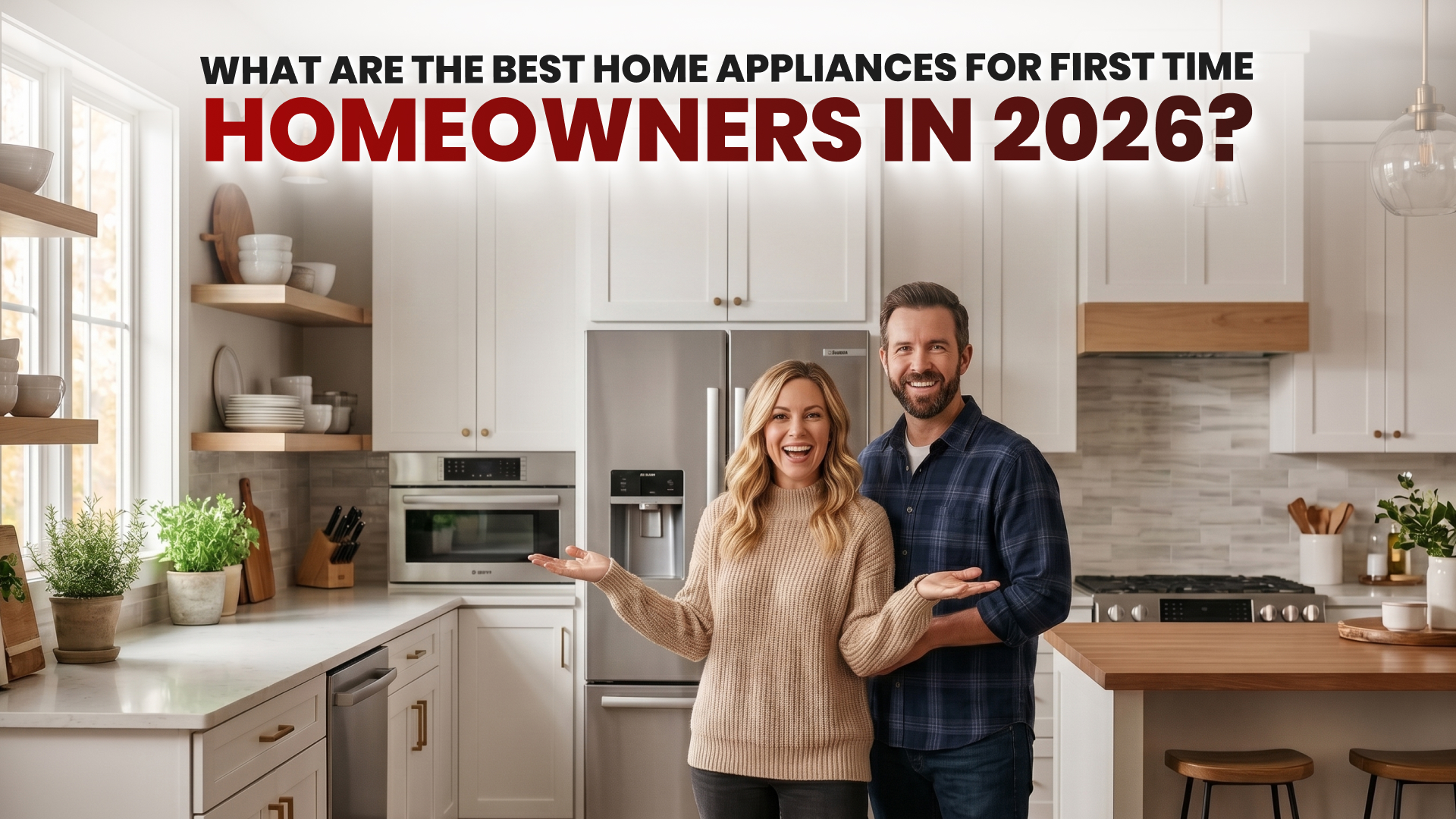
Buying your first home is exciting, but furnishing it can get expensive fast. The best home appliances for first-time homeowners are the ones you will use regularly, fit your space, match your lifestyle, and stay within budget. Start with five essentials: a refrigerator, range, dishwasher, washer, and dryer. Then add smaller appliances based on your actual needs.
At a Glance: Which Appliances Should New Homeowners Buy First?
| Appliance | Why You Need It | What to Prioritize |
| Refrigerator | Everyday food storage | Capacity, layout, energy efficiency |
| Range/Cooktop | Daily cooking | Fuel type, size, controls |
| Dishwasher | Saves time on cleanup | Capacity, cycles, efficiency |
| Washer | Essential for laundry | Capacity, water efficiency |
| Dryer | Faster laundry days | Sensor drying, capacity |
| Freezer | Extra food storage | Available space, capacity |
If you are furnishing your home from scratch, these are the essential home appliances worth prioritizing. You do not need every smart feature or luxury upgrade on day one.
At Bobo’s Home Appliances, shoppers can also explore open-box and scratch-and-dent appliances from trusted brands, with savings of up to 60% off MSRP on qualifying products. Bobo’s currently carries refrigerators, washer and dryer sets, ranges, dishwashers, freezers, and other major appliances.
Ready to shop? Explore Bobo’s Home Appliances
What Are the Most Important Appliances for a First Home?
1. What Refrigerator Should First-Time Homeowners Buy?
A refrigerator is probably the first appliance you should purchase because it gets used every single day.
For most new homeowners, a standard-depth French-door, side-by-side, or top-freezer refrigerator is a practical starting point. The best choice depends on your kitchen layout, household size, grocery habits, and available space.
Before buying, measure:
- Available width and height
- Cabinet depth
- Door clearance
- Pathway from the entrance to the kitchen
- Space needed around the refrigerator for ventilation
Energy efficiency is worth considering, too. ENERGY STAR says certified refrigerators are about 9% more energy efficient than models meeting the federal minimum standard.
Bobo’s offers multiple refrigerator styles, including French-door, side-by-side, and top-freezer models. Browse refrigerators before deciding which configuration works best for your kitchen.
2. What Range or Cooktop Is Best for a New Home?
Whether you cook every day or mostly rely on takeout, you will want a reliable cooking appliance.
The right choice depends on your home’s setup:
- Gas ranges: Great for shoppers who prefer direct flame control.
- Electric ranges: Straightforward and widely available.
- Induction cooktops: Fast, precise, and easy to clean.
- Double-oven ranges: Useful for people who cook large meals frequently.
If your home already has a gas connection, switching to electric may require additional planning. Check the existing hookups before purchasing.
For first-time homeowners, a standard range is usually a better starting point than spending extra on specialty cooking equipment you may rarely use.
3. Do First-Time Homeowners Really Need a Dishwasher?
If your kitchen has space and the plumbing is already set up, a dishwasher can quickly become one of those appliances you wonder how you lived without.
A good dishwasher should offer:
- Multiple wash cycles
- Adjustable racks
- A soil sensor
- Heated or energy-saving drying options
- Quiet operation
- A stainless-steel tub when available within your budget
ENERGY STAR notes that certified dishwashers can use less energy and water than handwashing, while also saving homeowners substantial time.
For busy homeowners, this is less about having a fancy kitchen and more about getting a few hours of your week back.
4. Should You Buy a Washer and Dryer Set?
For most homeowners, yes. A washer and dryer are among the most important essential home appliances, especially if your property does not have access to a shared laundry facility.
Buying a matching set can make sense because the units are designed to work together. It can also simplify installation, sizing, and the overall look of your laundry room.
ENERGY STAR reports that certified clothes washers use about 20% less energy and 30% less water than standard washers.
When comparing models, think about:
- Household size
- Laundry frequency
- Drum capacity
- Available laundry-room space
- Front-load vs. top-load design
- Energy and water consumption
- Stackability
For dryers, look for moisture sensors that can stop the cycle when clothes are dry. ENERGY STAR says this can reduce unnecessary drying and help prevent over-drying.
See Bobo’s washer and dryer options.
Which Appliances Should You Buy New, Open-Box, or Scratch-and-Dent?
This is where first-time homeowners can potentially stretch their budget.
You do not necessarily have to buy every appliance at full retail price. Open-box and scratch-and-dent models can be worth considering when the appliance has been properly inspected and the cosmetic condition is acceptable to you.
| Option | Best For | Potential Advantage |
| Brand New | Buyers wanting unopened products | Full retail-new condition |
| Open-Box | Budget-conscious buyers | Lower price on unused or lightly handled units |
| Scratch & Dent | Maximum savings | Cosmetic imperfections with potential savings |
| Premium New | Feature-focused buyers | Latest features and finishes |
Bobo’s says its open-box and scratch-and-dent appliances are inspected and tested before sale, with cosmetic imperfections disclosed to customers. Its warranty policy also states that appliances are covered by a 1-year CPS Appliance Shield, along with a 7-day return promise.
Learn more about scratch-and-dent appliances.
How Should First-Time Homeowners Shop for Appliances?
Buying appliances for an entire home can feel overwhelming. Instead of walking into a store and buying whatever looks good, use this simple process.
Follow These 6 Steps Before Buying
- Measure every installation space. Write down width, height, depth, door clearance, and available ventilation space.
- List your must-have appliances. Start with the refrigerator, range, dishwasher, washer, and dryer.
- Set a total appliance budget. Leave some room for delivery, installation, accessories, and unexpected costs.
- Compare operating costs. Look at energy and water efficiency, not just the purchase price.
- Choose features based on your lifestyle. Skip features you probably will not use.
- Check warranty and return terms. Especially important when comparing open-box and scratch-and-dent options.
This approach helps prevent a common first-home mistake: spending too much on one impressive appliance and then scrambling to afford everything else.
What Are the Best Appliances for New Homeowners on a Budget?
The best appliances for new homeowners are not necessarily the cheapest models. They are the appliances that offer the right combination of price, reliability, size, efficiency, and useful features.
One smart strategy is to save money on cosmetic details while spending more on functions you use every day.
For example, a refrigerator with a small side dent that will face a cabinet may offer better value than an identical pristine model at full price. The same idea can apply to washers, dryers, ranges, and dishwashers.
Bobo’s specializes in this kind of value-focused shopping, offering brand-new open-box and scratch-and-dent appliances alongside major appliance categories.
Explore affordable home appliances from Bobo’s.
What Should You Check Before Buying Any Appliance?
Use this quick checklist before paying:
- Measure the appliance opening.
- Check door and drawer clearance.
- Confirm electrical or gas requirements.
- Check water connections for refrigerators and washers.
- Compare capacity with your household needs.
- Look for energy-efficiency information.
- Review warranty coverage.
- Understand return conditions.
- Inspect open-box or scratch-and-dent units carefully.
- Ask about delivery and installation.
- Check whether your existing hookups need modification.
- Compare the final price, not just the advertised discount.
A lower sticker price is great, but the cheapest appliance is not always the cheapest appliance to own.
Which Appliances Can Wait Until Later?
Not everything needs to be purchased before your first night in the house.
Depending on your lifestyle, you can wait on:
- Standalone freezers
- Beverage refrigerators
- Wine coolers
- Specialty ovens
- High-end ice makers
- Extra-large appliances
- Smart appliances with features you do not need
Start with the basics. Once you understand how you actually use your home, you can add upgrades that make sense.
ENERGY STAR also points out that connected appliances can offer features such as remote monitoring, alerts, and scheduling. Smart features can be useful, but they should not automatically justify a higher price.
FAQs About the Best Home Appliances for First-Time Homeowners
What appliances should I buy first for a new house?
Start with a refrigerator, range or cooktop, dishwasher if your kitchen supports one, washer, and dryer. These cover food storage, cooking, cleaning, and laundry — the core daily tasks of most households.
Is it worth buying scratch-and-dent appliances for a first home?
They can be a smart budget option when the unit has been properly inspected and the cosmetic damage is acceptable. Always check the appliance’s condition, warranty, return policy, and final price before buying.
Should I buy appliances separately or as a package?
It depends on your budget and needs. Washer and dryer sets can be convenient, while kitchen packages may help create a consistent look. Compare package pricing against individual appliance deals before deciding.
Are energy-efficient appliances worth the extra cost?
Often, yes. Appliances that use less electricity or water can reduce ongoing operating costs. ENERGY STAR provides efficiency information that can help shoppers compare models.
What is the biggest mistake first-time homeowners make when buying appliances?
Buying based only on appearance or the lowest price. Measurements, installation requirements, capacity, energy use, warranty coverage, and long-term practicality matter just as much.
Build Your First Home the Smart Way
Your first home does not need a showroom-perfect kitchen or a laundry room packed with the latest technology. It needs appliances that work for your routine and your budget.
Focus on the essentials first. Measure before shopping. Compare efficiency and warranties. And do not overlook open-box or scratch-and-dent options if you are comfortable with minor cosmetic imperfections.
Bobo’s Home Appliances makes it easier to shop for major appliances without automatically paying full retail. With refrigerators, ranges, dishwashers, washers, dryers, freezers, open-box deals, scratch-and-dent options, and financing choices, you can build your first home around what actually matters: good appliances at a price that makes sense.